
POLICY / MACRO / FINANCE
Loan or Leverage?
Decoding China’s overseas financing strategy
From African railways to Balkan highways, China’s global lending has transformed skylines and debt books alike. But behind the cranes and cables lies a quieter story. One of influence, risk and power, built not with armies but with interest rates.
by Philip Tudor
Nov. 30, 2025
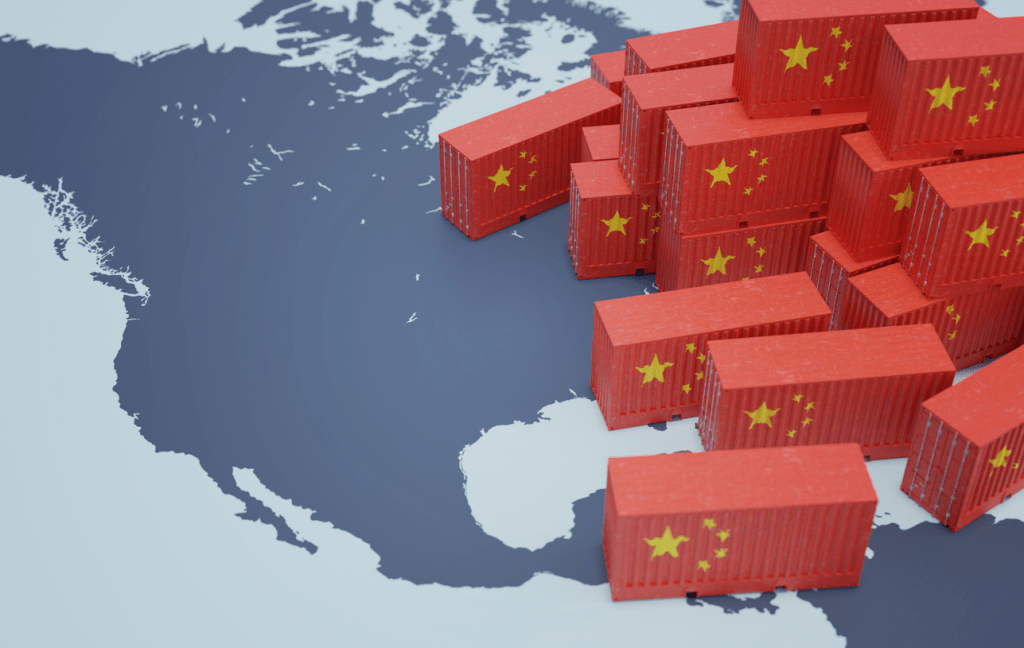
Imagine you’re offered a brand-new motorway, straight, smooth and gleaming. It stretches from your capital to the coast. It arrives with no lectures about human rights, no long meetings with the IMF, just a signature and a handshake. There’s only one catch: the bill. And the builder? China.
Over the past two decades, China has transformed from a borrower of foreign aid into the largest lender in the world. This lending spree which is the diplomatic equivalent of throwing open a hardware store and handing out credit cards, has built ports, railways and power stations from Pakistan to Peru. Much of it is wrapped in the red-and-gold ribbon of the Belt and Road Initiative. This is a sort of economic Silk Road 2.0 that aims to connect China with the rest of the world, via cement.
In just over a decade, China has gone from a modest international lender to the world’s largest bilateral creditor. It is building everything from digital networks in Africa to highways in South America. Supporters say it’s filling a gap the West long ignored. Critics worry it’s a new form of financial diplomacy. One where influence is paid for in concrete and steel. This article lifts the lid on how this lending machine works, what it aims to achieve and how it blurs the lines between help and leverage.
China’s lending surge and the Belt and Road Initiative
China’s rise as a global lender has been nothing short of astonishing. Between 2000 and 2021, it handed out more than $1.3 trillion in loans to developing countries. This is enough to build thousands of airports, rail lines or data centres. Much of this surge is tied to the Belt and Road Initiative. Over 150 countries, representing nearly 40% of the world’s economy, have signed on. For many, the appeal is obvious: roads, ports, railways and power grids, all financed by Beijing. These aren’t pipe dreams. They’re pipelines.
China’s policy banks, especially China Eximbank and the China Development Bank, became the workhorses of this effort. They funded mega-projects that others saw as too big, too risky, or simply too messy. In just five years, the number of projects worth over $500 million tripled. In addition, China’s yearly overseas development finance doubled that of the United States. It’s no wonder many countries began seeing Beijing as the financier of first resort. But this isn’t your typical foreign aid.
Chinese loans often come with harder terms. Interest rates that hover above 4%, short time periods and payback deadlines that come quickly. What’s more, much of the money ends up flowing back to Chinese companies that design and build the projects. Think of it less as a gift, and more as a high-interest tab at China’s construction superstore.
Furthermore, there is a layer of secrecy. Contracts are typically confidential. Many governments aren’t even allowed to publish the fine print. This has raised concerns and not just about the cost but about what else might be baked into the deal.
The development pitch: growth, gaps and grand designs
From China’s point of view, this is a story of shared progress. The official message? Everyone wins. Countries get long-overdue infrastructure and China gets new trade routes as well as markets for its companies. It’s framed as a handshake, not a handout.
And in many places, the investment is sorely needed. Decades of underfunding left huge holes in the basic infrastructure of many nations. It is like trying to build a house without plumbing or electricity.
Take railways for example. China helped build the Addis Ababa–Djibouti line, giving landlocked Ethiopia a fast track to the sea. In Pakistan, Chinese-backed power plants helped ease the country’s chronic blackouts. Ports, highways and fibre-optic cables have sprung up across Southeast Asia, opening up trade routes like arteries feeding an economic heart.
These projects can have real benefits, cheaper transport, fewer power cuts and the kind of logistics that attract factories and investors. Nevertheless, they also come with a price tag that can weigh heavily on national budgets.
One striking example is Montenegro. The Moračica Bridge and a highway built with Chinese loans were meant to link the country to the rest of the Balkans. What it got instead was a mountain of debt and a trip back to European lenders asking for help to refinance. It’s a bit like taking out a loan to buy a luxury car, only to realise you can’t afford the insurance.
Yet for many governments, China’s offer was a breath of fresh air. Western lenders, often cautious and bureaucratic, had long avoided large or politically complicated projects. China arrived with cash, blueprints, bulldozers and a promise not to lecture.
This no-strings-attached approach has made Beijing a popular partner, especially among leaders who felt overlooked by Western institutions. For them, Chinese finance wasn’t just a loan, it was a chance to finally build the things their countries had only dreamed about.
In speeches, African presidents have praised Chinese-built highways and rail links. Pakistan’s then-Prime Minister Imran Khan spoke of “shared prosperity.” Cambodia’s leader Hun Sen defended a Chinese-built expressway as a deal that didn’t add to public debt.
The message is clear: if projects are well chosen, well built and well managed, Chinese loans can pave the way to genuine development.
The hidden cost of concrete: when loan start to sink
If the first impression of China’s overseas lending is a sea of cranes, cables and concrete, a world being built one megaproject at a time, the second is more troubling. Some of those projects come with anchors, not wings.
As the dust settles on the highways and bridges, a number of countries are discovering something less visible beneath the surface. Debt that’s heavier than expected and far harder to repay.
In theory, infrastructure should pay for itself. Like planting an apple tree that eventually bears fruit, but many Chinese loans don’t give countries enough time for the trees to grow. Interest rates are high, grace periods are short and payback deadlines loom before benefits can bloom.
In practice, that has left countries like Zambia, Angola and Ethiopia in a financial squeeze. Zambia was the first African nation to default during the COVID-19 pandemic and China, as its largest lender, suddenly found itself cast not as builder, but as debt collector.
The problem isn’t just the size of the loans. It’s that some of the debt is hidden, tucked away in the books of state-owned enterprises or special-purpose entities. According to AidData, at least $380 billion in Chinese loans aren’t visible in official statistics. That’s like trying to balance your household budget while someone else is secretly taking out credit cards in your name.
And many of these hidden debts are backed by national assets. Oil, minerals or future revenue from the very projects being financed. Angola, for instance, promised oil shipments as collateral. When prices fell, Luanda had to ship even more barrels just to keep up with repayments, like selling off your harvest early because the price of seeds went up.
Meanwhile, countries like Kenya built transformative infrastructure, such as the Mombasa-Nairobi railway but found themselves raising taxes and facing street protests to cover the bill.
Even more worryingly, Chinese lenders are increasingly requiring foreign-currency escrow accounts, which means revenues from projects are diverted directly into Chinese-controlled accounts before the host country sees a cent. It’s a bit like building a toll road, only to discover you’re not the one collecting the tolls.
This system quietly pushes China to the front of the repayment queue, which makes it difficult for other lenders, including the IMF and Paris Club countries, to offer coordinated debt relief. If everyone else is negotiating how to split the bill but China already has the cash register, compromise becomes tricky.
Behind the curtain: secrecy, scrutiny and the politics of debt
Another striking feature of China’s lending is how little the public gets to see. Most contracts are confidential. Parliaments often aren’t consulted. And international institutions, like the World Bank, have warned that this oversight makes it dangerously easy to underestimate national debt.
In Malaysia, a new administration renegotiated inflated BRI deals. In the Maldives and Sierra Leone, incoming leaders cancelled contracts once they saw the details. These are political plot twists where the second act reveals what the first tried to keep off-stage.
Furthermore, the pattern suggests a deeper problem. Without transparency and public debate, it’s hard to tell whether these loans are smart bets or ticking time bombs. When financing skips the scrutiny, it skips accountability.
Strategy or side effect? The eeopolitical reach of Chinese lending
Is all this part of a cunning geopolitical plan? Is Beijing building not just ports and railways but a global web of dependence?
The Hambantota Port in Sri Lanka is often cited as Exhibit A. Struggling to repay Chinese loans, the Sri Lankan government agreed in 2017 to lease the underused port for 99 years to a Chinese state firm. Critics saw it as a classic bait-and-switch. First, Lend the money, then take the asset.
Nevertheless, the reality is more complicated. Independent research shows that Sri Lanka’s debt crisis had many sources, including private bond markets and domestic mismanagement. Chinese loans made up only about 10% of its external debt. Even so, the optics were powerful. An Indian Ocean port, effectively under Chinese control, became a symbol of sovereignty lost.
Beijing, for its part, rejects the idea of “debt-trap diplomacy.” Chinese officials say they don’t seize assets and that Hambantota was a negotiated lease, not a repossession. And in fairness, no clear pattern of strategic asset-grabbing has emerged across the board.
Even without outright takeovers, Chinese loans have geopolitical weight. Countries that rely heavily on Chinese finance tend to vote more often with Beijing at the UN, stay silent on issues like the South China Sea or Hong Kong and support Chinese candidates in international organizations. Influence doesn’t always need to be demanded. Sometimes, it’s simply earned through dependence.
China has also secured long-term access to energy through loans-for-oil deals in Venezuela, Ecuador and Angola. Essentially trading cash today for crude tomorrow. In Venezuela’s case, the debts became so large that grace periods had to be repeatedly renegotiated, especially when oil production collapsed.
And then there are the ports. Chinese state companies have financed, built or taken stakes in a string of strategic harbors. Gwadar in Pakistan, Djibouti in East Africa and Piraeus in Greece. The Greek port, run by China’s COSCO, is often cited as a win-win. It revitalised a stagnant hub and gave China a direct logistics footprint in the EU.
But not every country is as enthusiastic. In Montenegro, China’s billion-dollar highway loan connected mountain towns but also pushed the country to seek refinancing help from Europe. The EU saw it not just as a financial concern, but as a strategic footprint pushing into the Balkans.
Not always a master plan but always an impact
It’s tempting to imagine a grand Chinese blueprint, with every loan a chess move, every port a power play but the truth is more nuanced.
Many deals are driven by contractors seeking business, or by China’s need to export excess steel and cement, or by basic commercial logic. Sometimes, it’s just a company looking for a win, not a government laying geopolitical traps.
Still, the pattern adds up. Whether by design or by default, China’s role as the world’s biggest lender is reshaping global finance, development and diplomacy.
And while not every bridge or railway is a tool of strategy, each loan nudges the borrower and lender into a closer dance, where economics and influence step in rhythm.
From builder to bailout: China’s new lending playbook
After a decade of megaproject momentum, China has hit the brakes. Sovereign lending peaked around 2016 and has steadily fallen. In Africa, loans dropped from $28 billion to under $2 billion in just three years. By 2022, new Chinese loans were at their lowest in two decades. Instead of laying more track, Beijing is now repairing broken rails. Increasingly, Chinese money goes not toward new bridges but to bailouts, rollovers and emergency credit lines. This is what some researchers call “rescue lending.” In fact, by 2020–2021, more than half of China’s overseas lending was bailout-style support. It’s a remarkable shift that has occurred. From ambitious builder to cautious banker.
This pivot has also nudged China into global debt diplomacy. Under the G20’s Common Framework, it’s joined multilateral negotiations, co-chairing deals for countries like Zambia, Chad and Ethiopia. Though not always easy, China still resists writing off debt, it marks a break from its earlier “go-it-alone” strategy. At home, the message has changed too. Chinese authorities now talk of a “high-quality BRI”, favouring financially sound, environmentally sustainable and socially useful projects over grandiose monuments to excess. Mega-dams and showcase railways are out. Smaller, greener, safer projects are in.
The reasons are clear. China is facing its own slowdown, with a property crisis, rising domestic debt, and slowing growth. That makes caution, not conquest, the new currency of Chinese overseas finance.
Conclusion Steel threads, subtle ties
In an age where influence is often brandished like a banner, China has stitched it more subtly, into asphalt and iron, into transmission lines and shipping lanes. Its loans did not come with overt demands but with blueprints, budgets and the slow gravity of dependence. Some of those projects now stand tall, ports that hum with trade and tracks that hum with trains. Others have become monuments to overreach. From stranded highways, silent airports to debts that echo louder than the infrastructure they built.
Yet the deeper story lies not in what was constructed, but in what was connected. A rail line can carry freight or favours. A power plant can light a city or darken alternatives. With each loan, China didn’t just lay concrete, it laid claim to a seat at the table, often without saying a word.
Now, the momentum is slowing. The cranes are fewer. The terms are tighter. Beijing is recalibrating, lenders are regrouping and borrowers are reading the fine print more closely. The Belt and Road is no longer a sprint it’s become a long game of balance, negotiation and revision. Nevertheless, the legacy of the first decade is already etched across continents. A new map has been painted. Not one made out of borders but of obligations. Not an empire of force but one of financing.
And like all maps, its lines are hard to erase.
Sometimes, power doesn’t declare itself at the podium. Sometimes, it travels quietly, along the steel threads of a railway or through the fine print of a loan. It is reshaping the world in quieter ways than we know how to count.
Sources & Further reading
Aiddata
https://www.aiddata.org/publications/shifting-political-influence-un-general-assembly-behavior-during-debt-crisis#:~:text=,at%20the%20United%20Nations
CSIS
https://www.csis.org/analysis/responding-chinas-growing-influence-ports-global-south#:~:text=China,For%20each
Chathamhouse
https://www.chathamhouse.org/2020/08/debunking-myth-debt-trap-diplomacy/4-sri-lanka-and-bri
Harvard Kennedy School
https://www.hks.harvard.edu/sites/default/files/centers/mrcbg/Final_AWP_248_0%20Amended.pdf#:~:text=,soon%20because%20soon%20after
IMF
https://www.imf.org/en/news/articles/2023/06/22/pr23235-imf-welcomes-debt-treatment-agreement-reached-by-zambia
Reuters
https://www.reuters.com/world/china/china-lent-134-trln-2000-2021-focus-shifts-belt-road-rescue-finance-report-2023-11-06/#:~:text=China%20is%20also%20working%20more,banks%20and%20international%20financial%20institutions
https://www.reuters.com/world/africa/chinese-loans-africa-plummet-near-two-decade-low-study-2023-09-19/#:~:text=during%20the%20COVID,and%20Ethiopia%2C%20are%20also%20struggling
Wilsoncenter
https://www.wilsoncenter.org/blog-post/debt-distress-road-belt-and-road#:~:text=Ten%20years%20into%20the%20Belt,official%20part%20of%20its%20constitution
 The Silk Sheet