
FOREIGN POLICY
St. Pölten and Wuhan :
Bridging Europe and Asia through city diplomacy
When two cities that could hardly be more different at first glance celebrate their twentieth anniversary of Sister City Partnership, there is far more meaning to it, than a formal exchange. In the case of St. Pölten and Wuhan, this anniversary impressively shows how meaningful international partnerships can be when they are shaped by people, institutions, visions and the mutual will to learn from one another.
by Stefanie Daxbeck
Nov. 30, 2025
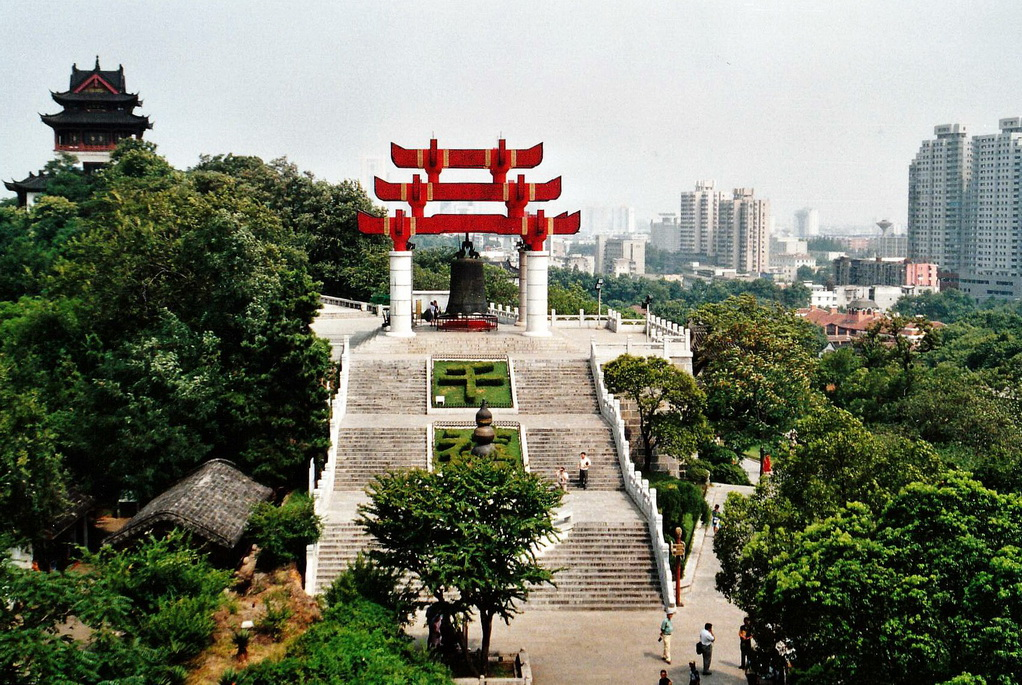
Since 2005, the capital of Lower Austria and the provincial capital of China have been connected by an active city partnership. It is administered by the Office for International Relations of the Magistrate of the City of St. Pölten, which coordinates and further develops the relationship. In addition, the Sister City Committee St. Pölten supports the partnership as a committed association and contributes through various projects. Over the years, numerous additional connections have emerged; between schools, universities, cultural institutions and economic actors, making the partnership today a broad and dynamic exchange network.
Common features of two capital cities – more than size, more than numbers
St. Pölten, with 60.000 inhabitants, and Wuhan, with roughly 14 million people, differ greatly in scale. Yet their roles are comparable: both are capitals of their regions. St. Pölten as the capital of Lower Austria and Wuhan as the capital of Hubei Province, and take on central political, economic and cultural functions.
Historically, both cities are rich in identity and stories. St. Pölten’s roots date back to the Neolithic period, as evidenced by archaeological finds that were brought to light only recently. The Roman settlement Aelium Cetium testifies to the early importance of the location. Later, St. Pölten developed into an impressive Baroque city, whose monasteries, churches and squares still shape the cityscape today.
Wuhan is one of the oldest urban centers in China. Its urban history spans more than 3.500 years, shaped by early settlements, trade traditions, cultural diversity and political developments that continue to define the city today. A visit to the Hubei Provincial Museum offered an intense impression of this ancient cultural history, which remains present everywhere despite rapid modernization.
Another special commonality of the two cities is their location on the water. St. Pölten lies on the river Traisen, which shapes the city and serves as an important natural and recreational area. The waterscape is complemented by the Viehofen Lakes and Lake Ratzersdorf, which invite people to walk and enjoy sports. Through the Traisen, St. Pölten is connected to the Danube, which is of tourist importance for the region. For example, for excursions to the Wachau.
Wuhan lies on two major rivers, the mighty Yangtze and the Han River. The city is also characterized by extensive lake landscapes, especially East Lake, one of the largest inner-city green and water recreation zones in China. This water location is not only scenic but also of great economic importance. Wuhan’s port is one of the largest inland ports in China, through which goods from the interior reach international shipping routes. At the same time, the river is a popular destination and an important location for cruise tourism.
Education cities in international exchange
St. Pölten and Wuhan are also strongly connected through their roles as education cities. Wuhan is home to numerous renowned universities and research institutes and is one of the most important higher education centers in central China. St. Pölten, too, has developed over the past decades into an important educational location with several universities and many secondary schools. This structural similarity forms an ideal basis for cooperation in the education sector.
One example is the Chinese Language Training Program for International Young Students, in which six students from St. Pölten participated in the summer of 2025, three from the University of Applied Sciences St. Pölten (USTP) and three from the New Design University (NDU). They spent four weeks in Wuhan to experience the language, culture and history of China at first hand. The program combined workshops and excursions to cultural sights. Particularly valuable was the direct exchange with students from Wuhan and other partner cities on site.
Exchange also takes place actively at school level: a student from HTL St. Pölten spent two weeks in Wuhan as part of the Youth Unlimited program, attended a partner school there and lived with a Chinese host family. This intercultural everyday experience offered the opportunity not only to get to know the language but also to develop friendships and gain a deeper understanding of cultural differences and similarities. In 2026, a return visit by a student from Wuhan to St. Pölten is planned, further strengthening the connection between the cities.
In the future, student exchange will continue so that young people can gain valuable intercultural experience and get to know Chinese culture directly. Especially the Hongshan district in Wuhan, an important location for universities and research institutions, is to be further expanded as a partner area. This is particularly significant because German is taught in Wuhan, while Chinese is on the curriculum in St. Pölten.
Delegation trip to Wuhan: encounters, insights, bridges
On the occasion of the anniversary year, a delegation of the Sister City Committee travelled to Wuhan in October 2025 for the twentieth anniversary. The visit included not only official celebrations but also personal encounters, professional exchange and impressive insights into the development of a Chinese metropolis.
A central moment was the visit to the Wuhan Foreign Language School, a long-standing partner school of St. Pölten. The school is an important center for international exchange, where German is taught in addition to English and other foreign languages. Conversely, Chinese is firmly anchored in the language offerings of several schools in St. Pölten—such as BHAK/BHAS St. Pölten and the Volkshochschule St. Pölten. This reciprocal cultural and linguistic openness is a key factor in the success of the partnership.
The delegation also gained insights into Wuhan’s Urban Planning Center, where long-term development models were presented. The city is working on visionary concepts for a sustainable, modern and livable metropolis, aiming to combine enormous population growth, ecological challenges and technological progress. These impressions showed how Wuhan balances historical identity with futuristic visions.
The visit to the Hubei Provincial Museum offered a deep dive into the millennia-old cultural history of the region and made clear how strongly tradition and modernity are intertwined in Wuhan. A walk through East Lake Park, with its extensive waterfront paths, tea houses and natural areas, allowed the delegation to experience Wuhan beyond its skyscrapers.
Future perspectives and significance of the partnership
The trip to Wuhan was not only a reflection on twenty successful years but also the beginning of a new chapter. An official return visit by a delegation from Wuhan to St. Pölten has already taken place. The focus of the short visit was the development of new project ideas in the fields of education, science, culture and business. New cooperations, joint programs and deepened exchange formats are intended to further strengthen the partnership.
Why this relationship is so valuable becomes clear with every exchange: city partnerships create spaces for understanding, dialogue and cooperation. They connect people across cultural boundaries, promote language and educational skills and open new perspectives, especially for young generations. The partnership offers both sides the opportunity to learn from each other, expand networks and enable knowledge to flow in both directions. In a globally connected world, city partnerships are stable bridges that build trust and broaden horizons.
After twenty years, it is clear that the cooperation between St. Pölten and Wuhan is not just a political gesture but a lively and sustainable relationship. The anniversary therefore marks not an end, but the beginning of a strengthened new chapter of friendship between two cities that have more in common than their distance suggests.
Sources & Further reading
St. Pölten – Website
https://www.st-poelten.at/kultur/kulturservice/internationale-kontakte/8551-staedtepartnerschaften
 The Silk Sheet