
POLICY / MACRO / GOVERNMENT
Beyond the West:
China’s distinct approach to monetary policy
From Washington to Frankfurt, central banking is usually treated as a universal craft with familiar rules and rituals. Beijing shows otherwise, preferring a blend of discretion, pragmatism and politics that rewrites the script in its own style.
by Philip Tudor
Aug. 31, 2025
In 2008, as the global economy swayed on the edge of collapse, the U.S. Federal Reserve (Fed) did something extraordinary. It started holding press conferences. This, for an infamously secretive institution, was a revelation. Transparency had become part of the playbook. Say what you’re aiming for, shape interest rates accordingly and guide expectations about future inflation and rate moves. It is teaching by explanation, like a careful tutor, rather than pronouncing riddles like an oracle. If the Chair of the Fed had found himself in Beijing instead of Washington, he might have swapped his press briefings for quiet conversations behind closed doors.
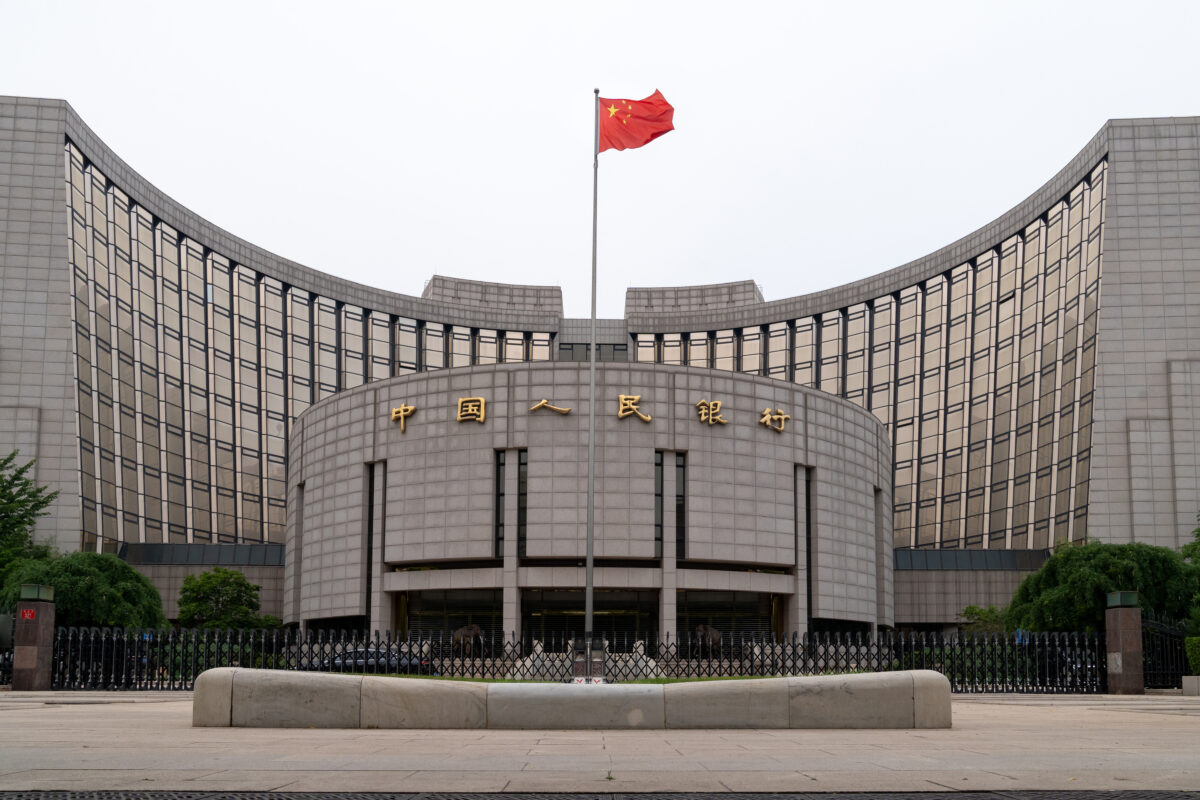
China’s central bank, the People’s Bank of China (PBOC), prefers a different kind of choreography, one with fewer spotlights. There are no public inflation targets, no fixed schedules of announcements and few sweeping pronouncements about the state of the economy. Instead, the PBOC acts quietly, almost subtly, using a suite of tools that Western central bankers might recognize but wouldn’t quite know how to use in the same way. The result? A monetary policy that’s neither purely market-driven nor entirely under political command. It is something altogether more… Chinese.
What central banks usually do
In the textbooks, the central bank is a kind of economic thermostat: when inflation runs hot, you turn up interest rates or when growth flags, you turn them down. The idea is simple. Make borrowing a bit more expensive to cool an overheating economy or cheaper to revive a sluggish one.
Central banks in the U.S. and Europe tend to follow that script. They declare an inflation target, for example, 2% and then move their key policy rate up or down depending on what inflation, growth and unemployment are doing. In between, they buy or sell government bonds which controls the supply of money, issue guidance to shape expectations and, on occasion, deploy emergency tools when interest rates near zero. All of this is done in public. There are calendars. Press releases. Speeches. Sometimes even X-threads. While the Fed and the European Central Bank have embraced a sort of monetary theatre, the PBOC operates more like a backstage manager. You won’t find the president of the PBOC giving live commentary from Beijing.
In China, the central bank has no inflation target carved into stone. Instead, it takes its cues from broader government objectives which are routinely cited around 3%. Namely, to maintain steady economic growth (around 5% for 2024–25) while managing financial risk and keeping the Chinese Yuan stable. In other words, don’t expect fireworks. Expect levers being pulled behind the curtain.
China’s Toolkit: More a cabinet than a hammer
For the Fed, the federal funds rate is the headline act, even if it has other tools backstage. The PBOC, by contrast, prefers a whole ensemble of instruments rather than one star performer. There’s the seven-day repo rate, essentially the price at which banks borrow from one another over the course of a week, using repurchase agreements. In late 2024, the PBOC nudged it down to 1.50%. The move barely made headlines, but it signaled an intent to get money flowing again.
Then there’s the Medium-Term Lending Facility (MLF), a mouthful that boils down to one-year loans extended by the central bank to commercial banks. That rate, too, was trimmed to 2.50% in September 2024.
Perhaps most consequential is the Loan Prime Rate (LPR), a benchmark derived from quotes by 18 banks, updated monthly, and used to price most new loans. As of October 2024, the one-year LPR sat at 3.10% while the five-year version hovered at 3.60%. A modest cut can ripple through the economy, lowering borrowing costs for everyone from property developers to small shop owners.
If that isn’t enough, the PBOC can reach for another lever: the Reserve Requirement Ratio (RRR). This is the slice of deposits banks must park with the central bank rather than lend out. By trimming the RRR, Beijing frees up more money for loans. By raising it, it reigns in the banks’ generosity. Take the RRR. In most economies, reserve requirements are relics, dusty instruments left unused in favour of slicker market-based tools. But not in China. Here, the RRR is alive and well, quietly shaping how much money banks can lend.
By late 2024, China had lowered the average RRR to just 6.6%. This is less than half the 15% level it stood at in 2018. In September, PBOC Governor Pan Gongsheng announced another cut. Just half a percentage point, but enough to inject roughly ¥1 trillion into the financial system. It was a significant move but delivered with characteristic subtlety. It was by no means a dramatic pivot, just a gentle nod and the suggestion that “more cuts could come if needed.” That’s the essence of how the PBOC moves. It is less of a conductor and more of a soft-spoken traffic officer.
Instructions without announcements
Western central banks issue press releases. The PBOC offers suggestions. One of the more curious tools in China’s monetary shed is “window guidance.” It sounds like advice about curtain placement but it’s actually something much more potent. These are off-the-record nudges telling banks where to lend. In late 2022, the message was to buy up local government debt. More recently, banks have been encouraged to support households and small businesses. All of this happens quietly of course. This isn’t policy by an official announcement. It’s policy by implication.
Then there’s the Macro Prudential Assessment (MPA), introduced in 2016. It essentially is a central bank’s version of a school report. Each bank is graded on risk. Basically, how exposed it is to shaky sectors, how much credit it extends and so on. Banks with higher risk scores might be forced to hold more reserves, while safer banks get more flexibility. It’s a clever way to fine-tune the system without applying the same brake to every wheel.
Furthermore, of course, there’s the Chinese yuan. Officially, China allows a “flexible” exchange rate. Unofficially, the PBOC does not like surprises. Every morning, it sets a midpoint, a target rate around which the yuan is allowed to fluctuate. In April 2025 that midpoint was set at 7.2066 yuan per U.S. dollar, the weakest level since 2023 but still stronger than the market expected. The message? “We’ll tolerate some depreciation, but don’t get carried away.” That same day, state-owned banks were seen selling dollars to prop up the yuan. It was a quiet intervention, delivered without commentary, but it spoke volumes.
The PBOC uses many levers, not just interest rates. It deploys short-term rates like the seven-day repo, medium-term tools like the MLF, benchmarks like the Loan Prime Rate, reserve ratios, targeted lending programmes and informal guidance. It mixes them like a chef in a kitchen with no fixed recipe by tasting, adjusting and stirring. As one analyst put it, the bank is now “shifting its focus to price-based tools.” That doesn’t mean it’s left its quantity-based habits behind. In fact, it still relies on tools like credit quotas and window guidance, precisely because they offer more control than any single rate ever could.
Why Not Just Pick a Rate?
Why doesn’t China just do what the Fed does, set one key interest rate and let the market take it from there? The answer lies in the anatomy of China’s banking system. Unlike the U.S., where banks must compete for deposits and chase borrowers, most Chinese banks are flush with savings. They don’t need to fight for cash. In addition, lending often follows policy goals, not pure profit motives. Banks operate on thin net interest margins. That is the sliver of income between what they pay depositors and what they earn from loans. So, when the PBOC cuts rates, banks feel the squeeze. Too many cuts and lending becomes unattractive, no matter how cheap the money. Even when credit is cheap, much of it still flows to state-owned firms and local governments, not the dynamic private sector. That’s a legacy of China’s system of credit quotas, which act as guardrails and sometimes even as roadblocks. This happens regardless of what rates are doing.
Deputy Governor Zou Lan recently acknowledged the difficulty of moving away from this state-directed model. Instead of abandoning it, the PBOC now aims to influence the entire yield curve, that is, the full spectrum of interest rates from short to long term. A cut to the seven-day repo rate is expected to lead to a lower one-year MLF rate, which in turn should lower the LPR that sets the tone for business loans. In other words, the PBOC is playing a symphony, not striking a gong.
But as with many chain reactions in economics, the chain often rusts at the joints. Which is why, in China, monetary policy doesn’t travel on a single rail. It needs a convoy. When the rate cuts don’t quite light the fire, the People’s Bank of China brings out the rest of the playbook. It lowers the Reserve Requirement Ratio to free up lending capacity, gives banks a discreet nudge on where to direct those loans and lets fiscal policy lean in behind.
One can see the choreography clearly in the numbers. From 2020 to 2024, all four of China’s key rates drifted downward. The one-year Loan Prime Rate, now at 3.10%, sets the tone for most business lending. The five-year rate, currently 3.60%, casts its shadow over mortgage payments. Each cut has been reinforced with a drop in the RRR and generous liquidity injections. These are moves that would be considered bold, even unusual, by the standards of the Fed or the European Central Bank. Nevertheless, China’s financial plumbing is different. It needs this mix of monetary,regulatory and administrative tools to ensure that cheaper credit actually gets where it’s supposed to go.
Monetary policy with Chinese characteristics
If Western central banks think in terms of targets, China’s PBOC thinks in terms of missions. Inflation is part of the brief, but so are national development goals, industrial upgrades, and social stability. One telling phrase in the PBOC’s vocabulary is “structural support.” It’s not about stimulating the whole economy, but rather targeting the right parts of it. By mid-2024, roughly 15% of the PBOC’s balance sheet was committed to these targeted loan programs according to analysts. These were often developed in close coordination with regulators and other ministries. For example, consider housing. The central bank has helped lower minimum down payments, relaxed loan caps and encouraged banks to support qualified developers.T hese are not your typical monetary levers. They’re a hybrid of regulatory intervention and economic management, all under the central bank’s roof. Unlike in the U.S. or Europe, where central banks often pride themselves on independence, in China there’s little illusion that the PBOC is acting alone. It is one hand of a larger body.
In late 2024, China’s top leadership called for both “appropriately loose” monetary policy and a “more proactive” fiscal policy. That’s bureaucratic code for: spend more, cut rates, and make sure the credit flows. The government issued special bonds, offered tax breaks and pressed local authorities to ramp up infrastructure spending and job support. Meanwhile, the PBOC cut interest rates and reserve requirements. This alignment isn’t accidental. It reflects the reality that in China, monetary and fiscal authorities don’t operate on parallel tracks. They share a map and often a destination. After a key party meeting in September 2024, where officials underscored the urgency of supporting growth, the PBOC responded almost immediately. New stimulus rolled out within days. Governor Pan Gongsheng later declared that policy had become “accommodative”. A subtle but clear signal of a shift away from the earlier, more cautious stance.
What this means for investors and policy watchers
For investors and policy watchers outside China, the lesson is simple but decoding it rarely is. The first principle is currency stability comes first. When the Chinese yuan wobbles, the PBOC doesn’t wait for the market to find its footing. After U.S. tariffs rattled confidence in April 2025, Beijing responded not with words but with actions. It set a stronger-than-expected daily reference rate and directed state-owned banks to sell dollars, effectively leaning against the market tide. The Chinese yuan isn’t a free-floating currency, as the dollar is. Instead, it’s a kind of managed drift, like a sailboat allowed to tack back and forth but never too far off course.
The second point? Don’t expect a press release to explain it all. While the chair of the Fed might stand behind a podium and tell the world where interest rates are going and why, PBOC officials tend to leave breadcrumbs. A slight adjustment to the Loan Prime Rate, a veiled comment in a Politburo statement and a shift in bond yields. Exactly these are the signals. Analysts must read between the lines and sometimes between the absences. Western investors are accustomed to forward guidance. In China, they get puzzle pieces.
This secrecy brings both risk and reward. When China does ease, for example by reducing reserve requirements, the impact is felt well beyond Beijing. Bond yields fall, the yuan softens, and global markets adjust. The carry trade, where investors borrow cheaply in China and seek higher returns elsewhere, can amplify the effect. But the gains come with uncertainty. Markets often second-guess China’s moves. In September 2024, a sweeping stimulus plan briefly lifted Chinese equities until traders began to question just how much support was really coming and for how long. This phenomenon is called policy fatigue. If each round of stimulus seems to do less than the last or if communication stays murky, investors begin to doubt whether the tools are still sharp. Worse, too much easing might reignite risky lending. Too little might allow growth to stall. Either path echoes through global supply chains, commodity prices, and inflation dynamics. The stakes are high, but the signals? They are often vague.
Conclusion: A mosaic, not a mirror
The People’s Bank of China doesn’t follow the Western central banking rulebook. It uses a broader range of tools, communicates more through tone than transcript and remains deeply embedded in a state-led economic strategy. Where the Fed wields a single rate like a scalpel, the PBOC uses an entire toolkit. Ranging from interest rates, reserve ratios and window guidance to housing directives and currency controls.
In late 2024 and early 2025, this toolkit was on full display. It was a sweeping stimulus campaign with rate cuts, reserve requirement reductions and large-scale government spending. Arguably the boldest policy loosening in over a decade. Yet even here, the approach was characteristically Chinese. Careful, coordinated and aimed as much at sectors as at macro indicators. The key lesson? Don’t expect a single signal. China’s central bank doesn’t just fight inflation or smooth the business cycle. It works to deliver growth, reign in risk and maintain control, all at once.
In a world where central banks are often expected to speak loudly and act fast, the PBOC offers a striking counterpoint. It acts as an institution that moves deliberately, speaks sparingly and acts with the long game in mind. It may not always be easy to follow but that doesn’t mean it’s not working. After all, in the world of central banking, sometimes the quietest players leave the deepest footprints.
Sources & Further reading
International monetary fund
https://www.imf.org/en/About/Factsheets/Sheets/2023/monetary-policy-and-centralbanking#:~:text=Central%20banks%20use%20monetary%20policy,are%20moving%20t o%20inflation%20targeting
Reuters
https://www.reuters.com/markets/asia/chinas-central-bank-cuts-banks-reserverequirement-ratio-by-50-bps-2024-0927/#:~:text=As%20flagged%20%20on%20Tuesday,by%2050%20basis%20points
https://www.reuters.com/markets/asia/china-central-bank-cuts-medium-term-loanrate-2024-09-25/#:~:text=The%20People%27s%20Bank%20of%20China,from%202.30
https://www.reuters.com/markets/rates-bonds/china-cuts-benchmark-loan-primerates-by-25-bps-2024-10-21/#:~:text=The%20one,previously
https://www.reuters.com/world/china/china-sees-room-lower-reserve-requirementratio-pboc-oOicial-says-2024-09-05/#:~:text=changes%20in%20major%20economies
https://www.reuters.com/world/china/china-has-room-more-rrr-cuts-pboc-oOicialsays-2024-1214/#:~:text=BEIJING%2C%20Dec%2014%20%28Reuters%29%20,according%20to%20 state%20broadcaster%20CCTV
https://www.reuters.com/world/china/china-rolls-out-broad-rate-cuts-other-stimulusspur-weak-economy-2024-09-24/#:~:text=RRR%20CUT
https://www.reuters.com/markets/asia/chinas-central-bank-cuts-banks-reserverequirement-ratio-by-50-bps-2024-0927/#:~:text=The%20cuts%20take%20eOect%20on,RRR%20reduction%20later%20this %20year
https://www.reuters.com/markets/currencies/yuan-falls-2007-lows-us-tariOs-chinakick-2025-0409/#:~:text=The%20People%27s%20Bank%20of%20China,lowest%20since%20Septe mber%2011%2C%202023
https://www.reuters.com/world/china/china-leaves-lending-benchmark-lprsunchanged-expected-2024-1120/#:~:text=New%20bank%20lending%20in%20China,failed%20to%20boost%20credit %20demand
https://www.reuters.com/world/china/china-announces-first-monetary-policy-shiftsince-2010-spur-growth-2024-1209/#:~:text=BEIJING%2C%20Dec%209%20%28Reuters%29%20,quoted%20as%20sayi ng%20on%20Monday
https://www.reuters.com/markets/asia/chinas-central-bank-cuts-banks-reserverequirement-ratio-by-50-bps-2024-0927/#:~:text=On%20the%20heels%20of%20the,the%20matter%20have%20told%20Reuters
https://www.reuters.com/markets/rates-bonds/balancing-risks-rewards-china-setleave-lending-rates-unchanged-feb-2025-0219/#:~:text=The%20central%20bank%20has%20adopted,lenders%20limit%20its%20e asing%20eOorts
https://www.reuters.com/markets/rates-bonds/china-cuts-benchmark-loan-primerates-by-25-bps-2024-1021/#:~:text=Stocks%20have%20wobbled%20in%20recent,big%20enough%20to%20rev ive%20growth
Reserve Bank of Australia
https://www.rba.gov.au/publications/bulletin/2024/apr/chinas-monetary-policyframework-and-financial-markettransmission.html#:~:text=Along%20with%20price,Bergman%202022%3B%20Reuters %202023
Bank for International Settlements https://www.bis.org/review/r240621c.htm#:~:text=Concerning%20the%20structure%2 0of%20money,the%20central%20bank%20lending%20for
 The Silk Sheet